





Page-level and action-level permissions
Lunixar separates page access from in-page actions. A user can view a page without being able to run a sensitive operation when the role does not include that permission.
RBAC and tenant controls
Lunixar combines role-based access control, role-to-device assignment, organizations, locations, and tenant isolation so each operator works only inside the scope they are allowed to manage.
The model applies to routes, actions, reports, remote tools, patching, scripts, installers, and sessions.
Access model
Roles package permissions, permissions block pages or actions, and device scope keeps each user inside the endpoint population they should manage.

Core controls
Permissions apply to views and actions. If a permission is missing, the route or operation is blocked.
Lunixar separates page access from in-page actions. A user can view a page without being able to run a sensitive operation when the role does not include that permission.
Roles can be linked to managed devices. This limits the endpoint population a technician can operate inside the tenant.
Endpoints retain organization and location context for client, business unit, branch, department, or site operations, depending on the workspace model.
Remote screen, CMD, PowerShell, Bash, scripts, schedules, patching, and security actions use specific permissions to reduce unnecessary privilege.
Billing, users, roles, installers, alerts, reports, and support can be separated from daily technical operations permissions.
Lunixar cross-tenant administration is separated from normal customer-tenant permissions and requires its own controls.
Authorization flow
Access does not depend on one signal. Lunixar combines identity, tenant, role, permission, device scope, and tenant operating state.
01
The session identifies the user and tenant. Data is queried with that tenant as the primary boundary.
02
The platform checks whether the role includes the required permission and whether the user has scope over the affected device population.
03
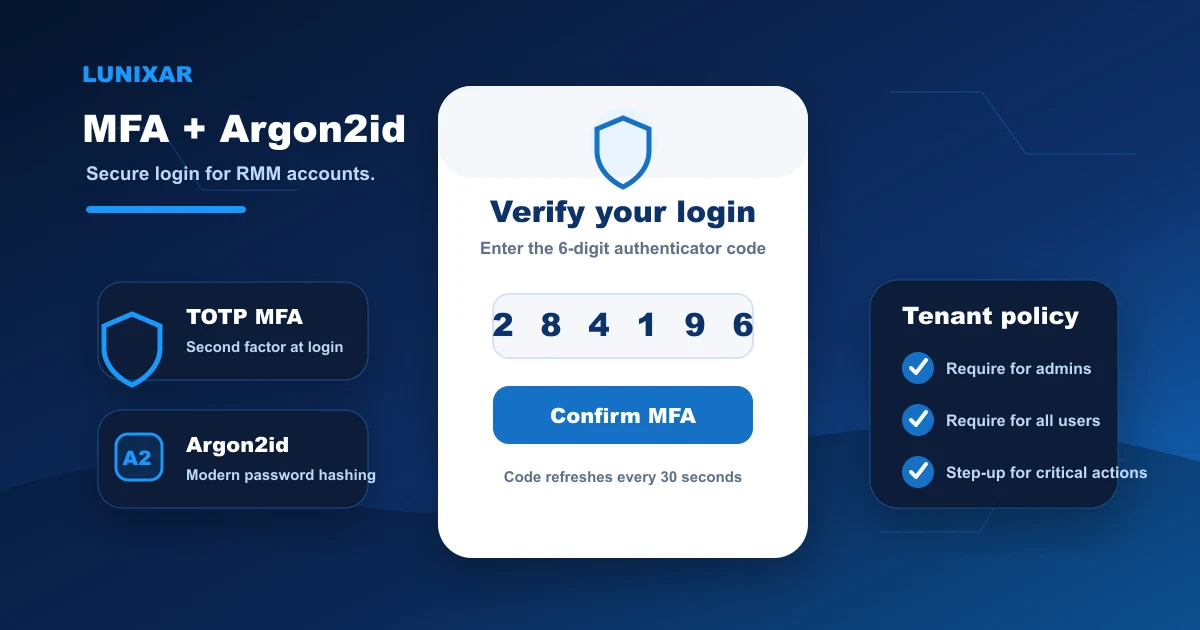
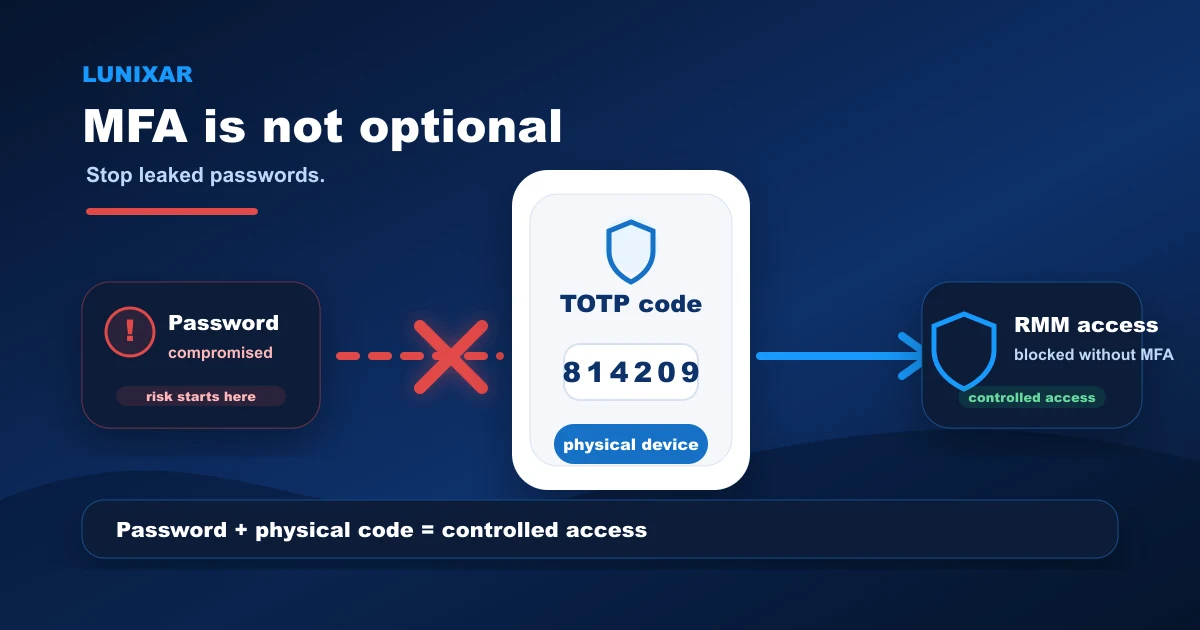
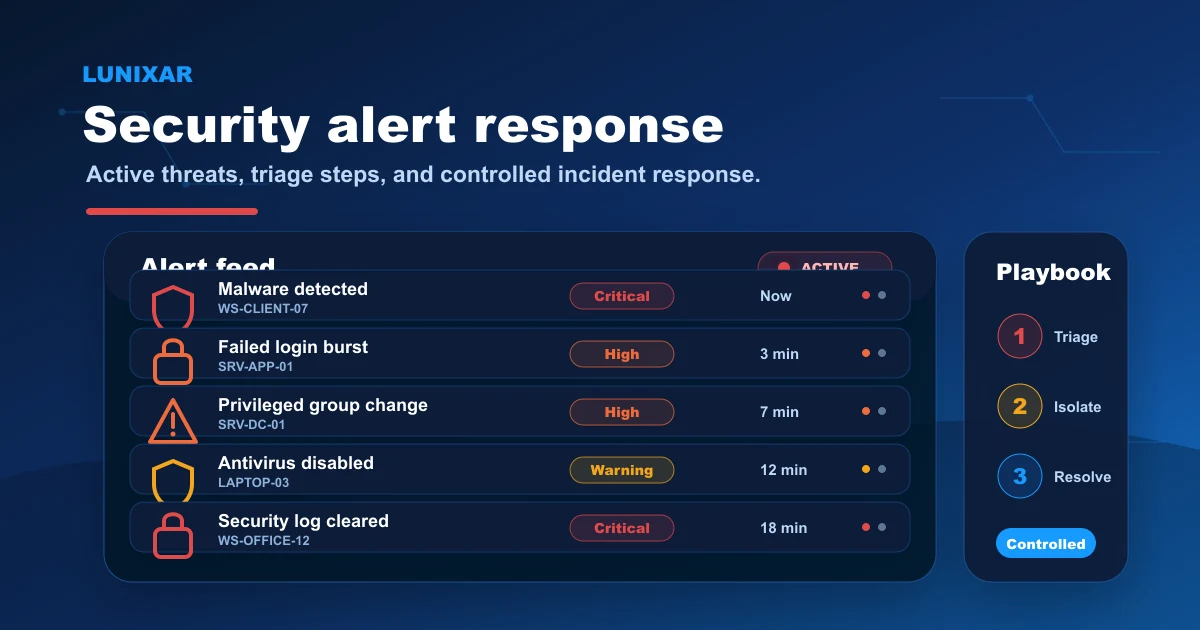
Sensitive actions still pass restricted-tenant, remote-trust, platform-compatibility, and audit controls.
For MSPs and IT teams
A tenant can organize clients, departments, or locations while roles limit who can view, administer, or execute actions on each population.
FAQ
Yes. Roles package permissions and are assigned to users. Permissions control page and action access such as viewing devices, starting remote screen, running terminal, managing patches, viewing reports, or managing billing.
Yes. Lunixar maintains relationships between roles and managed devices to limit the endpoint population a user can operate inside their tenant.
No. Organizations, locations, and workspace labels provide operational context for clients, business units, or sites, but they do not replace permissions. The user still needs the required permission for each page or action.
No. Remote trust can only bypass specific content-policy blocks while it is active. It does not bypass RBAC, tenant isolation, demo-device limits, platform compatibility, audit logging, or session scope.
Security evaluation
This page summarizes current controls for buyers, marketplaces, and security reviews that need to validate how operational access is limited in Lunixar RMM.

